
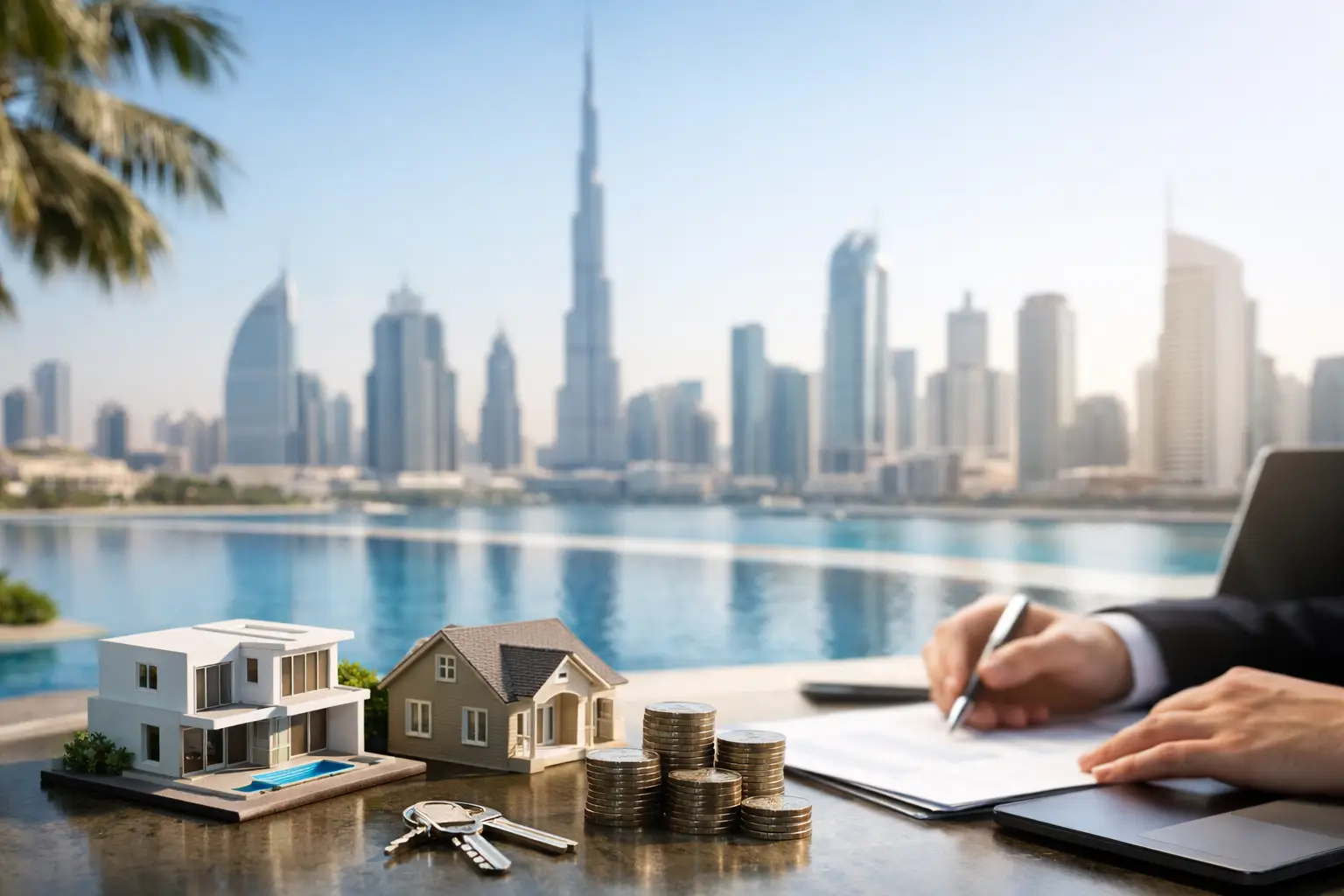
A buyer looking at Dubai today is usually weighing two very different stories. One is about strong rental yields, tax efficiency, and global demand. The other is about timing, supply, and whether paying a premium now still leaves room for upside. So, is buying property in Dubai a good investment? The honest answer is yes for many buyers, but not for every budget, every area, or every strategy.
Dubai can be an attractive market because it combines several features that are hard to find together in one city: no annual property tax, a large expatriate tenant base, global brand appeal, modern infrastructure, and a broad range of price points. You can buy a waterfront apartment in a prime district, a family villa in a master-planned community, or a mid-market unit aimed at yield. That flexibility matters, because the right investment in Dubai depends less on the city alone and more on what you are trying to achieve.
Why buying property in Dubai can make sense
For investors, the strongest case starts with income. Compared with many mature global cities, Dubai has historically offered more attractive gross rental yields, especially in well-lesearched mid-market communities. Areas such as JVC, Dubai South, Town Square, and parts of Business Bay often appeal to buyers focused on cash flow rather than prestige alone. Prime locations can also perform well, but they usually rely more on long-term capital preservation and demand resilience than headline yield.
Then there is the tax environment. Dubai remains appealing to international buyers because ongoing ownership costs are often simpler than in markets where annual property taxes can significantly erode returns. That does not mean ownership is cost-free. Buyers still need to account for transfer fees, service charges, maintenance, furnishing, leasing costs, and financing expenses if a mortgage is involved. But from a global portfolio perspective, the net return profile can still look compelling.
Capital appreciation is the second part of the argument. Dubai is not a flat-growth market. It tends to move in cycles, and that volatility can work for or against an investor depending on entry point and holding period. Over the right cycle, buyers in supply-constrained or infrastructure-backed locations can see substantial appreciation. This is particularly true when demand is supported by population growth, business migration, new transport links, and limited near-term competing stock in the same segment.
Is buying property in Dubai a good investment for every buyer?
No, and that is where many articles oversimplify the market. Dubai rewards clarity. If you are buying with a three-year view, little cash buffer, and no plan for vacancies or service charges, the investment may feel less attractive than the headline numbers suggest. If you are buying a unit based only on a launch discount or marketing brochure, you may end up in an oversupplied pocket with slower resale traction.
The city works best for buyers who match the asset to the strategy. An end-user buying a home in Dubai Hills or Arabian Ranches may value lifestyle, school access, and long-term occupancy more than immediate yield. An overseas investor may prefer a compact apartment in a high-demand rental corridor with lower vacancy risk. A more aggressive buyer may target off-plan property for staged payment plans and appreciation potential before handover.
That is why the better question is not just whether Dubai is a good investment. It is whether a specific property, in a specific community, at a specific entry price, fits your timeline and return target.
The numbers that matter more than headlines
When assessing any Dubai property, focus on four metrics: rental yield, net yield, vacancy risk, and resale liquidity. Gross yield can look strong on paper, but net yield gives you the real picture once service charges, management, maintenance, and leasing costs are included. In some buildings, especially older or heavily serviced projects, those charges can materially reduce returns.
Vacancy risk is equally important. A property that looks cheaper than neighboring options may be priced that way for a reason. Weak layouts, poor building management, limited parking, noisy micro-locations, or excessive future supply can all affect tenant demand. In practical terms, a slightly more expensive apartment in a proven building may outperform a cheaper one over time.
Resale liquidity matters because exits are part of investment performance. Some communities have broad, active buyer pools and strong mortgage eligibility, which helps resale demand. Others are more niche. If you may need to sell within a few years, buying in an area with stronger transaction volume can reduce risk.
Off-plan vs ready property
This is one of the biggest decision points for Dubai buyers. Off-plan can be a strong investment when purchased from a reputable developer in a location with genuine end-user and tenant demand. The appeal is clear: lower upfront entry in some cases, staggered payment plans, potential appreciation during construction, and access to new stock that may command rental and resale premiums at handover.
But off-plan is not automatically the better deal. Delivery timelines, future supply, post-handover payment structures, and handover quality all need scrutiny. A project can look attractive at launch and still underperform if too many comparable units hit the market at the same time.
Ready property offers a different advantage. You can assess the actual building, tenant profile, occupancy, service quality, and current rental income. The returns are easier to model because the asset already exists. For buyers who prioritize immediate cash flow or lower execution risk, ready property is often the more straightforward choice.
What can weaken returns in Dubai
Every serious investor should look at the downside before committing capital. One risk is buying the wrong product in the right city. A poor floor plan, excessive service charges, weak developer reputation, or an undifferentiated building in a crowded submarket can limit both rent and resale performance.
Another risk is overpaying during a hot cycle. Dubai can move quickly, and strong sentiment sometimes pushes buyers toward decisions that rely on perfect market conditions continuing. Even in a favorable market, returns are made at the point of purchase. Entry price discipline still matters.
Financing can also change the outcome. Mortgage rates, loan-to-value ratios, and monthly carrying costs can compress returns if not modeled carefully. For overseas buyers especially, exchange rate movements and banking timelines should be part of the plan, not an afterthought.
Where investment quality tends to differ
Prime areas such as Downtown Dubai, Dubai Marina, Palm Jumeirah, and Dubai Hills Estate often attract buyers seeking long-term demand resilience, stronger tenant quality, and broad international appeal. These locations can preserve value well, but entry prices are higher, so yields may be more moderate.
Mid-market communities such as JVC, Town Square, and parts of Dubai South can be compelling for yield-focused investors, particularly where infrastructure, access, and community amenities support rental demand. The key is selectivity. Not every building in a strong area is a strong investment.
Commercial property and villas can also outperform in the right conditions, but they require a different underwriting approach. Office demand, villa supply, plot quality, and family community dynamics all behave differently from the apartment market.
So, is buying property in Dubai a good investment right now?
For many buyers, yes. Dubai remains one of the more investable real estate markets for those seeking a combination of rental income, growth potential, and international accessibility. It is especially appealing for buyers who want exposure to a globally connected city with flexible ownership options and a relatively efficient transaction environment.
Still, timing alone should not drive the decision. A smart purchase in a durable location can outperform a rushed purchase made during a favorable market. The buyers who usually do best are the ones who compare communities carefully, stress-test their returns, account for all ownership costs, and buy with a clear hold strategy.
For anyone asking whether buying property in Dubai is a good investment, the real edge comes from precision. Choose the right area, the right asset type, and the right price point. Run the yield, IRR, and financing numbers before you commit. And if you are buying from abroad or entering the market for the first time, work with advisors who understand not just listings, but performance. That is where confidence stops being a sales pitch and starts becoming a real investment decision.
Official sources
- Dubai Land Department (DLD): property registration, fees and RERA
- DLD real estate project status: check an off-plan project’s registration and progress
- Dubai REST app: DLD’s official app for owners, buyers and investors
- Law No. 8 of 2007 on escrow accounts: how off-plan payments are protected
- Central Bank of the UAE mortgage rules: loan-to-value and debt limits
- ICP Golden Residency: Golden Visa rules for property investors
Related Vidabricks guides
- How to buy property in Dubai
- Dubai property buying costs
- Escrow and buyer protection
- Dubai off-plan payment plans index
Vidabricks Real Estate LLC is a RERA-registered brokerage (ORN 24316). Our client commitments · Editorial policy


