
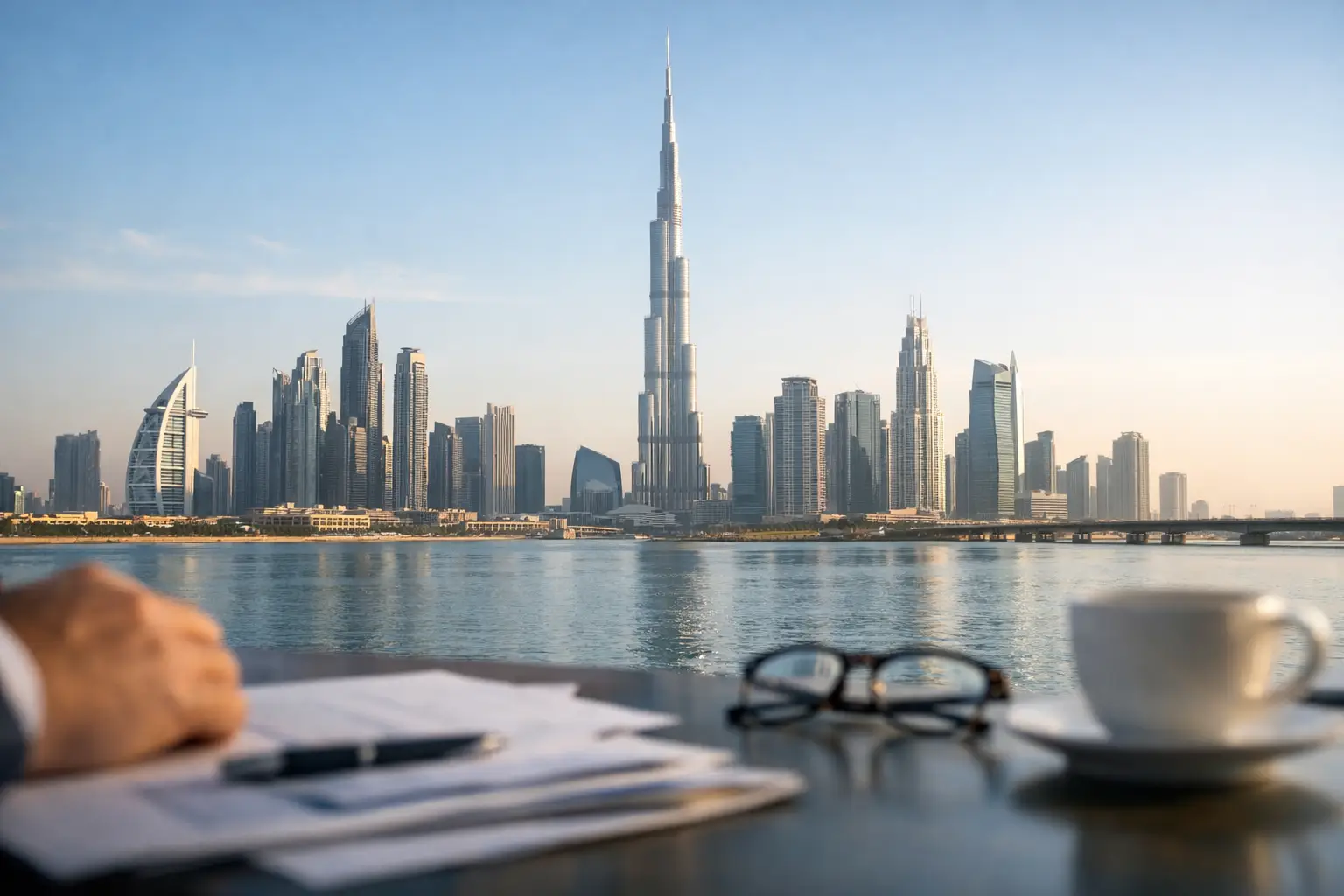
A market does not stay investable on headlines alone. When buyers ask whether post war the fundamentals of Dubai are still strong to purchase a property in Dubai, the real answer sits in the numbers behind demand, liquidity, policy, and long-term confidence. Dubai property has weathered global shocks before, and each time serious buyers separate short-term sentiment from structural drivers. That distinction matters now, especially for overseas investors, resident buyers upgrading homes, and first-time purchasers weighing whether to enter before prices move again.
Why post-war the fundamentals of Dubai are still strong
Strip away the noise and Dubai still offers a combination few global cities can match. Population growth is supporting housing demand, business formation remains active, infrastructure spending continues, and the tax environment stays attractive for residents and investors alike. Most importantly, the emirate keeps drawing capital, talent, and companies at a pace that feeds real occupancy rather than speculation alone. Strong property markets are not built on launch buzz or social media attention. They are built on people needing places to live, work, and invest, and Dubai benefits from all three. High-net-worth individuals are relocating, professionals are moving for jobs and lifestyle, and businesses are expanding regional headquarters here. That broadens the buyer base across luxury, upper mid-market, and high-demand affordable communities, which is exactly what gives a market durability.
The case for buying in Dubai after geopolitical uncertainty
Geopolitical tension usually creates two immediate effects in property markets: hesitation and a repricing of risk. Neither automatically means a weak market. In fact, globally connected cities with strong regulation, stable leadership, and safe-haven appeal often benefit once buyers reassess where capital should sit. Dubai has repeatedly positioned itself as one of those cities. It offers legal ownership frameworks for foreign buyers, mature escrow rules in off-plan, global air connectivity, modern infrastructure, and a government that acts quickly when market clarity is needed. For investors comparing regional and international options, that stability premium matters. There is also a practical point many buyers miss: demand in Dubai is not tied to one country or bloc. It spans local buyers, GCC purchasers, European investors, South Asian diaspora capital, African entrepreneurs, and globally mobile professionals. That diversity does not remove risk, but it makes the market far less fragile than outsiders assume.
What actually supports Dubai property values
The strongest argument for buying is not that prices always rise, because they do not. The stronger argument is that the underlying supports remain firmly intact.
Population and household growth
Dubai keeps adding residents, and a rising population eventually translates into housing absorption. Not every newcomer buys, but more residents increase pressure on rental stock, which supports rents and pushes long-term tenants toward ownership. For end-users, that means today's decision is not only about current pricing. It is about securing an asset in a city where demand is still expanding rather than plateauing.
Policy support and investor-friendly regulation
Visa reforms, retirement pathways, long-term residency options, and business-friendly licensing all strengthen the ownership story. Property is no longer seen by international buyers as a short-stay holding. It is increasingly tied to lifestyle planning, residency, and wealth preservation, which deepens the buyer pool and lengthens average holding periods across the market.
Attractive yields versus other global markets
Yields remain one of Dubai's biggest differentiators. Buyers looking at London, Singapore, New York, or much of Europe often find lower rental returns, higher taxes, or both. Dubai is not a low-risk market, but the income profile can be materially stronger, especially in well selected communities with proven tenant demand and healthy occupancy through the cycle.
Regulated off-plan frameworks and developer activity
Off-plan remains a major and rewarding entry route, particularly for buyers who want staged payment plans and lower upfront exposure. The key is not treating every project equally. Strong developers, credible handover timelines, sensible supply pipelines, and a community with real end-user appeal make a decisive difference. Well-regulated escrow does not mean risk-free, but it offers far more protection than most emerging property markets provide.
Where buyers need to be careful
Saying the fundamentals are strong is not the same as saying every purchase is smart. Dubai is a market where asset selection matters enormously. Some areas are driven by genuine end-user demand and tight rental absorption, while others fill with investor-led launches that look attractive on paper but face stiffer competition at handover. A unit with a flashy payment plan can still underperform if supply in that micro-market outpaces demand. Pricing discipline matters too. In a rising market, buyers sometimes accept developer premiums or resale markups that erode future upside, a real risk for overseas investors without immediate visibility into community-level comparables. The right buy is not simply a good building. It is a good building at the right entry price with a clear income or resale case. Interest rates add another variable, since elevated financing costs affect affordability for mortgage-driven buyers, and even cash buyers should weigh opportunity cost against expected hold period and exit strategy.
Post-war, the fundamentals of Dubai are still strong - but what should you buy?
The answer depends on your objective. If you are an end-user, focus first on livability rather than headline appreciation. School access, commute, service charges, community quality, and resale depth matter more than launch hype, and established master-planned communities give better visibility on daily life and future liquidity. If you are an income investor, prioritise rental depth and tenant profile. Communities such as Dubai Marina, JVC, Business Bay, Dubai Hills, Al Furjan, and selected parts of Dubai South or Town Square can each work for different budgets, but the right fit depends on unit size, build quality, and supply pipeline. A strong spreadsheet yield means little if tenant turnover is high or maintenance erodes returns. If you are buying off-plan for capital growth, timing and developer selection become central. Early access can create real advantage, but only when launch pricing is sensible and the project fills a genuine market gap. Buying early is not automatically buying well.
How serious buyers should evaluate the market now
A disciplined process usually beats emotional timing. Start with budget clarity and decide whether your priority is end use, rental income, residency, or long-term appreciation. From there, compare communities on achieved rents, service charges, transaction volumes, future supply, and developer reputation. For financed purchases, stress-test your numbers so repayments stay manageable if rates do not fall quickly. For investment purchases, work through realistic net yield rather than gross, including vacancy assumptions, maintenance, furnishing, and transfer costs. This is where professional advisory support adds value, because surface-level pricing often hides the gap between a decent purchase and a high-performing one. The same applies to off-plan: review payment schedules carefully, understand construction-linked obligations, and confirm the handover period aligns with your liquidity plans. Working with a RERA-certified advisor such as Vidabricks helps narrow options by return expectation, holding period, and real community demand rather than marketing language. Dubai will still have cycles. Prices will cool in some segments and surge in others, occasionally moving ahead of fundamentals before settling. That is normal in an open, fast-moving market. What endures is the core: people are moving in, businesses are committing capital, infrastructure keeps expanding, and ownership stays globally competitive. For the right buyer, this is not a market to approach with fear, but with precision, choosing the right asset before the broader market agrees. Geopolitical headlines will keep moving sentiment in the short term, but they rarely change the structural drivers that make Dubai property work. Buyers who anchor decisions to demand, yield, and supply, rather than to the news cycle, are the ones who tend to look back on a downturn era purchase as one of their best-timed entries.
Official sources
- Dubai Land Department (DLD): property registration, fees and RERA
- DLD real estate project status: check an off-plan project’s registration and progress
- Dubai REST app: DLD’s official app for owners, buyers and investors
- Law No. 8 of 2007 on escrow accounts: how off-plan payments are protected
- Central Bank of the UAE mortgage rules: loan-to-value and debt limits
- ICP Golden Residency: Golden Visa rules for property investors
Related Vidabricks guides
- How to buy property in Dubai
- Dubai property buying costs
- Escrow and buyer protection
- Dubai off-plan payment plans index
Vidabricks Real Estate LLC is a RERA-registered brokerage (ORN 24316). Our client commitments · Editorial policy


